ColorMusic
Education • Music • Art
236 | Gb Relative Modes - Guitar Chords
Permutations to expand your songwriting palette
September 22, 2023
post photo preview

Earlier posts in this series look at how to form and play different permutations (or "modes") of a key.

These principles apply to any key, including the key of Gb (a.k.a., F#), as we'll explore here. When you take the 7 notes of the Gb major scale -- Gb, Ab, Bb, Cb, Db, Eb, F, Gb -- you create 7 modes starting on each respective note.
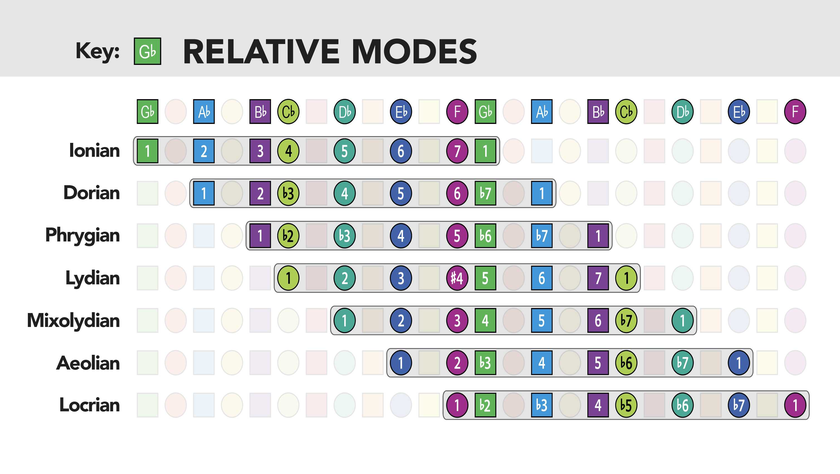
Each pattern is a distinct sound because each mode begins and ends on a different note (or "tonic"). In this example, the tonic of Gb Ionian is Gb ... while the tonic of Ab Dorian is Ab ... and so on.

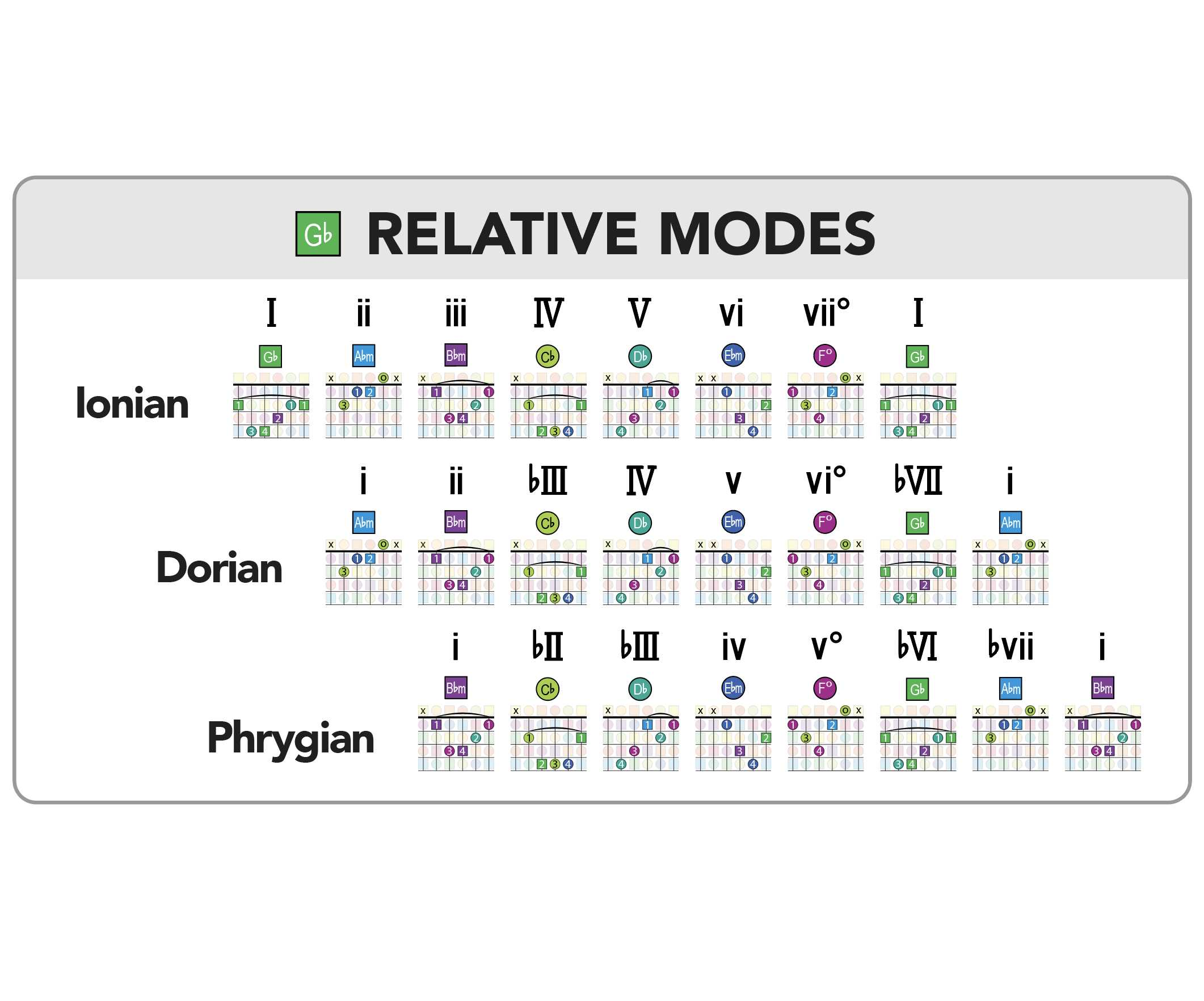
Each sequence of notes sounds nice. But they sound especially good when played as chords -- like these chords of Gb Ionian (a.k.a., Gb major):

The Gb Ionian mode sounds good fleshed out as harmonies because it's really just the major scale pattern. And just like the notes, these same 7 chords can also be arranged into 7 permutations -- like these three patterns, for example:
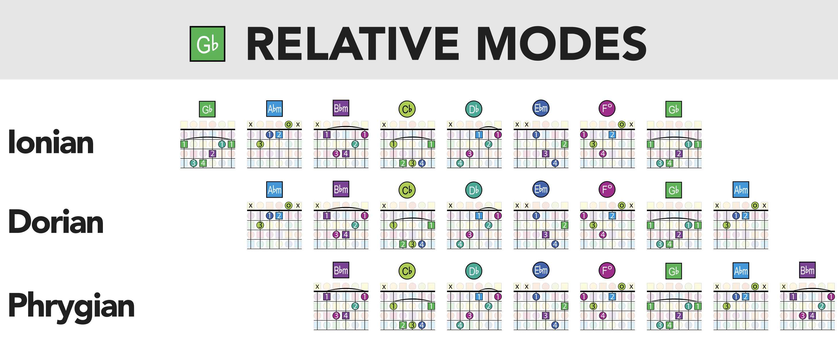
And the same idea applies to all of the other chords in this key, as you can see here....


Only for Supporters
To read the rest of this article and access other paid content, you must be a supporter
5
What else you may like…
Videos
Posts
Articles

Hi Mike! I landed here after watching some of your YouTube videos and getting the first glimmer of understanding of music theory from them. This is some of the best content I've seen. That said, having just landed here finding myself a little confused about where I should be going or even if I've got the right content. Coming in as as I am as a beginning piano player, something between generic music theory and piano specific examples work for me well but I'm not really sure for that where to begin. It would be fantastic if you could point the way. Thank you.

May 15, 2026

Mike, im kinda a silent member. Ive been around for a few years. I LOVE your work. Seeing music is a very effective way to teach. Its not really a part odmf music instruction but im curious what graphic program you use. In the past ive done some graphic design and I know building info around a circle is a lot of work and tricky.

Tritone Math Madness

12 really is a perfect number.

6 is a factor of 12 and thus divides the chromatic scale into all 12 inherent tritone pairs.

12/6 = 2 resulting in 6 bisectors that create 12 pairs of notes diametrically opposite eachother.

The math is exactly as on point as the colors are.

Amazing!

December 03, 2025
post photo preview
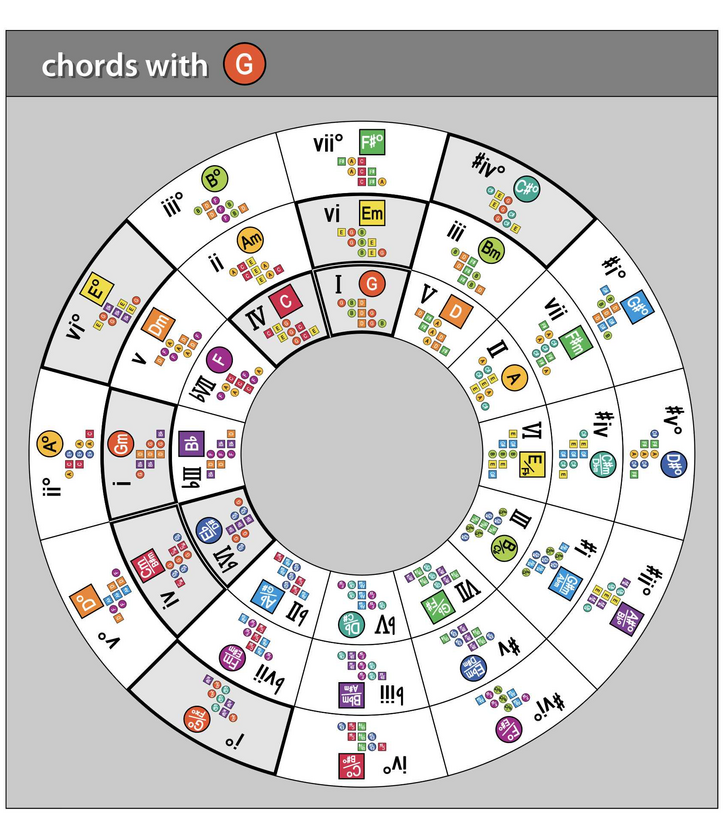
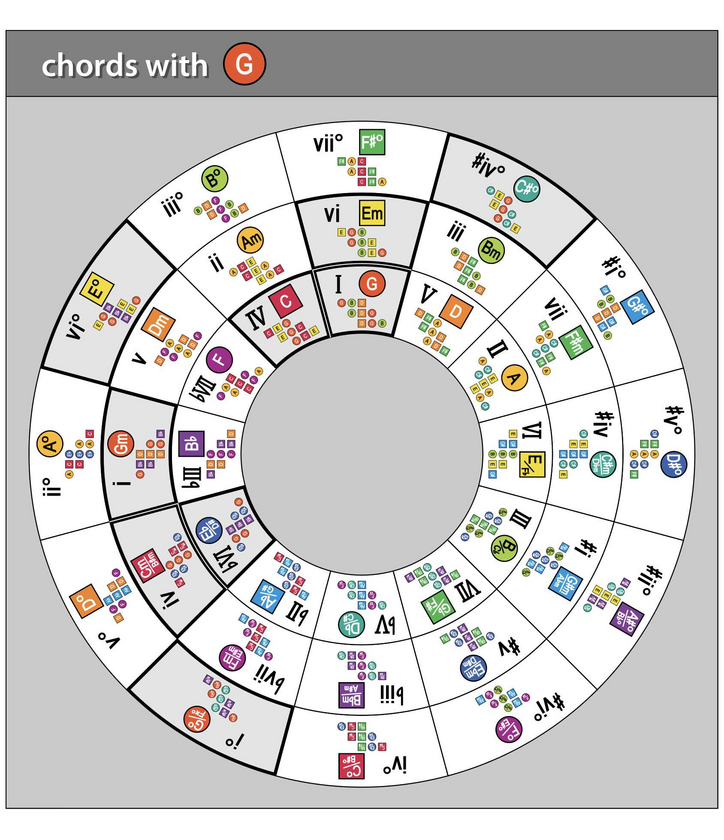
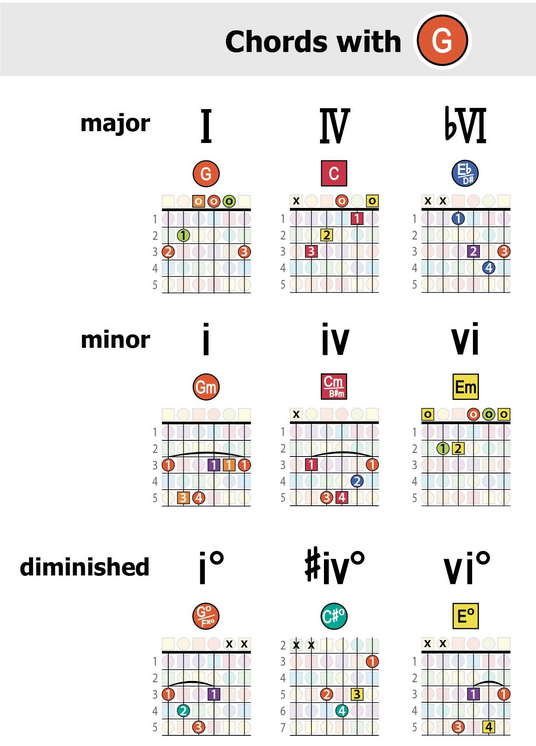
429 | Chords with a G Note

This is a "heatmap" of all chords (triads) with a G note. (The staggered stacks of notes in each cell simply illustrate the various inversions of each triad.)

Chord progressions built from these chords tend to sound good -- due to their shared link with the G note.

You can see (and hear) what I mean as you play around with these chords.

For a map of chords that include the C note, see Post #425. Notice that the harmonic positions of each chord are the same -- that is, the same numerals appear (I, IV, bVI, etc.) since the ChordMap is symmetrical across all keys.

Read full Article
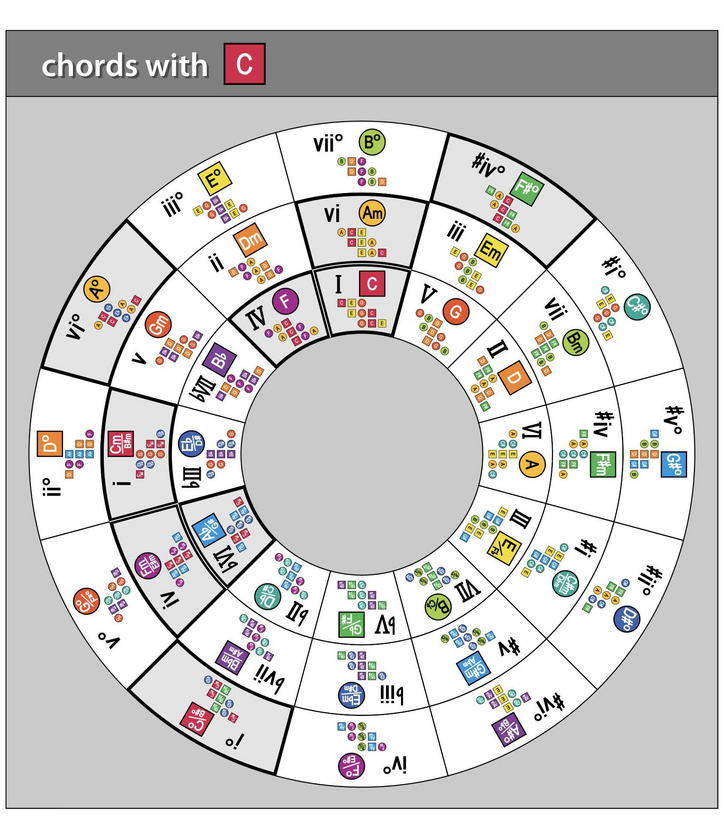
425 | Chords with a C Note

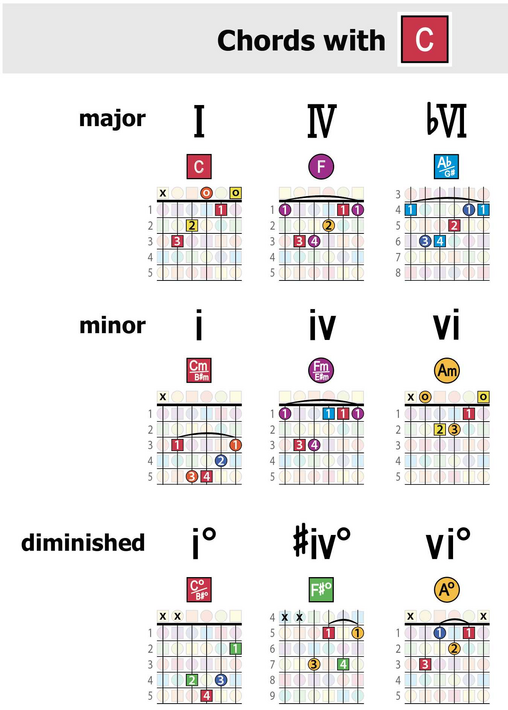
This image helps to get the ideas flowing for songwriting. It shows the various chords (triads) with a C note. Like a heat map, it highlights all the locations across harmonic space that include this pitch.

And what's cool is that, as you play different progressions built from these chords, they tend to sound good. This is due to their shared link with the C note.

You'll see (and hear) what I mean as you play around with these chords.

A song might not be built entirely from these chords alone -- they might simply serve as a springboard for more ideas. Or maybe you can come up with a full tune from these harmonies....

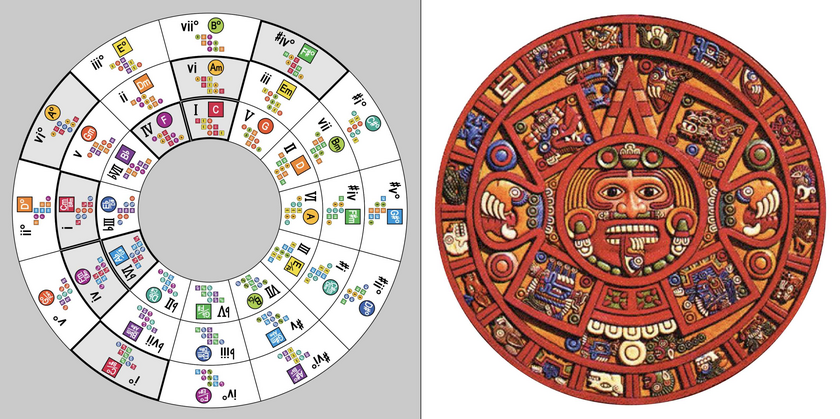
And on a more esoteric note ... it's interesting how this version of the ChordMap resembles the Mayan calendar, yeah? With its colorful symbols and concentric rings, it's structure is strangely similar.

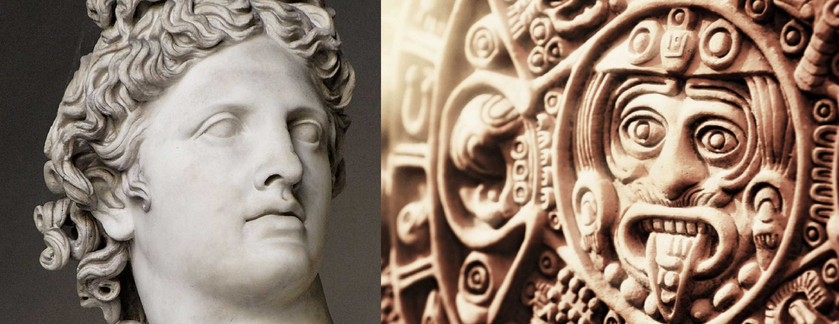
The Aztec sun god, Tonatiuh, sits at the center of the Mayan calendar. Like Apollo, the Greek god of the sun (and music), he plays a central role in the progression of time. Music is the audible convergence of time and space (pitch and rhythm). And it all flows in a cycle.

As they say, everything is connected. :)

Read full Article
post photo preview
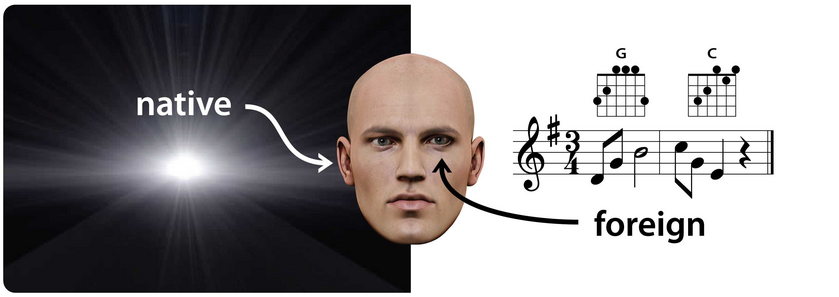
376 | The Rosetta Stone of Music

Music is a language. A language that your ears naturally understand, but that’s also utterly foreign to your eyes … as a mess of confusing dots and lines and squiggles.

It’s frustrating, to say the least. Because it means that you’re already fluent in this language (or at least you can easily hear it), but at the same time you’re not able to speak it (by easily playing and creating it yourself).

And as long as you’re confused by the visual language of music, you’ll struggle with the syntax of song, unable to fully articulate the music that you can hear inside.

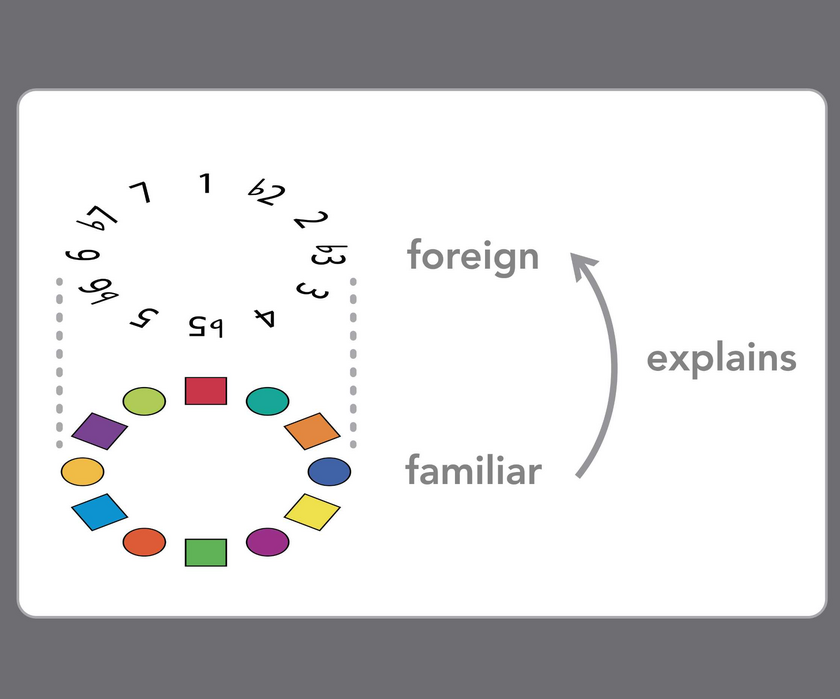
So what’s needed is a way to align your hearing with your sight. That is, you need a method to illustrate the patterns of music in such a way that they LOOK as natural and simple as they SOUND.

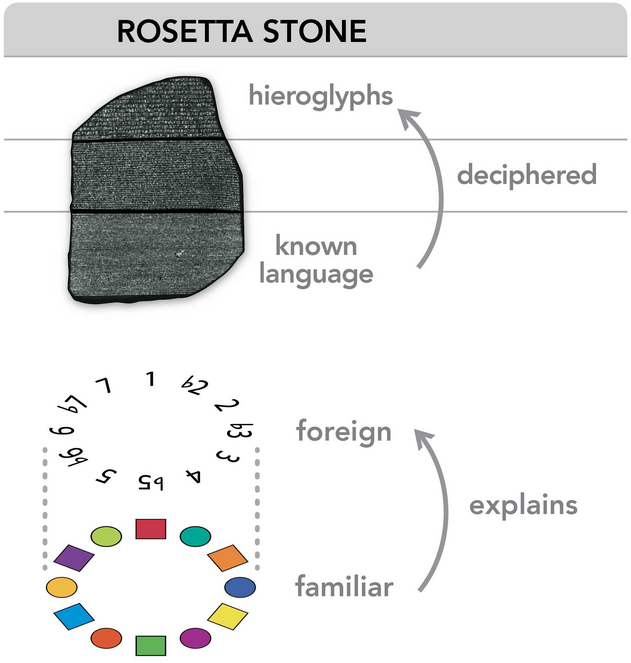
In other words, you need a “Rosetta Stone” to help bridge the gap between the musical language of your ears and that of your eyes.

And with color, you have the answer — using the special connection between the circle of fifths and the color wheel, along with the natural link between the circle of fifths and the chromatic scale.

By leveraging your familiarity with color to decipher the otherwise cryptic sequence notes, you can finally crack the code of music. This is our musical Rosetta Stone.


Read full Article
See More
Available on mobile and TV devices
google store google store app store app store
google store google store app tv store app tv store amazon store amazon store roku store roku store
Powered by Locals