ColorMusic
Education • Art • Music
172 | Winter Wonderland - song insight
By Felix Bernard & Richard Bernhard Smith
December 12, 2022
post photo preview

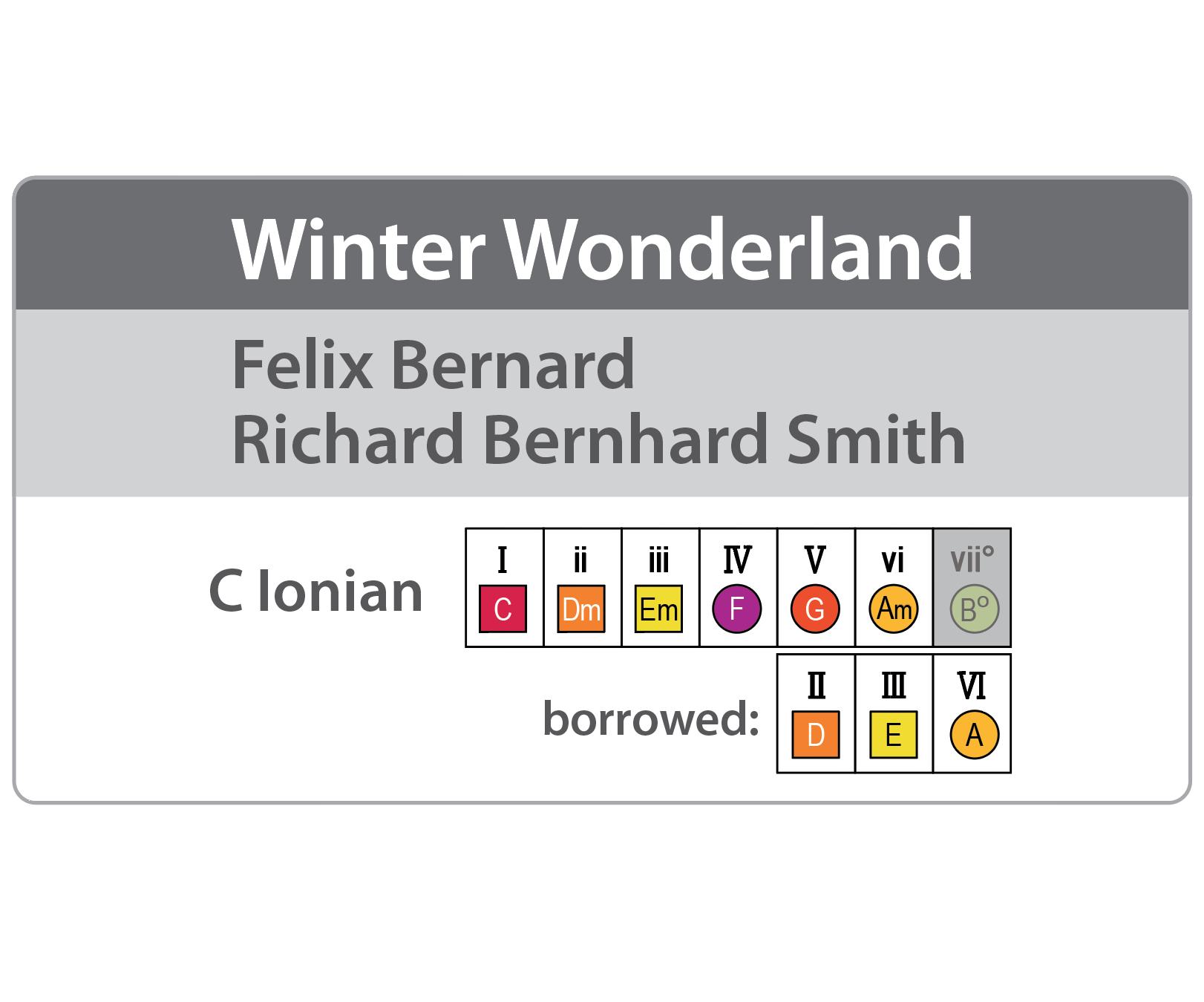
The song, "Winter Wonderland," was written in 1934 -- in the middle of the Great Depression. Yet it's a beautiful tune full of hope.

At first glance, though, it can be hard to make sense of its chord progressions. In total, this song has 10 chords.

But why these chords specifically? The answer comes in stages. First, it helps to lay out the chords within the structure of time -- where the progressions align with the framework of measures.

Then the next step is to look at these patterns through the lens of music theory. To see the key and mode in the circle of fifths. And with this insight, you can understand how all of these chords are related to make this song great.... 

Only for Supporters
To read the rest of this article and access other paid content, you must be a supporter

0
What else you may like…
Videos
Posts
Articles

Tritone Math Madness

12 really is a perfect number.

6 is a factor of 12 and thus divides the chromatic scale into all 12 inherent tritone pairs.

12/6 = 2 resulting in 6 bisectors that create 12 pairs of notes diametrically opposite eachother.

The math is exactly as on point as the colors are.

Amazing!

442 | How to Write Chord Progressions

How do people write chord progressions? The process isn't random. Once you can see how chords are connected in the circle of fifths, you can make great music. Here are 6 song examples....

SONG 1 - No Woman, No Cry (Bob Marley)
-- Simple progression with only 4 chords from the key

SONG 2 - Can't Buy Me Love (The Beatles)
-- 12-bar blues in the verse, with movement through minor chords in the chorus

SONG 3 - Hallelujah (Leonard Cohen)
-- Mostly chords from the key, with a secondary dominant (V/vi) added for harmonic variety

SONG 4 - You Really Got a Hold on Me (Smokey Robinson)
-- Mostly diatonic chords, with a secondary dominant (V/V) to set up the dominant chord

SONG 5 - Don't Look Back in Anger (Oasis)
-- More harmonic variety, a secondary dominant (V/vi) along with two borrowed chords from the parallel Aeolian mode (iv, bVII7)

SONG 6 - Californication (Red Hot Chili Peppers)
-- Written in the Aeolian mode, with a wildly divergent bridge that jump cuts into the parallel Ionian ...

Songs_in_the_Key_of_C_(music_theory).pdf
January 18, 2026

I figured out the progressions for four of my favorite songs by Athlete!

December 03, 2025
post photo preview
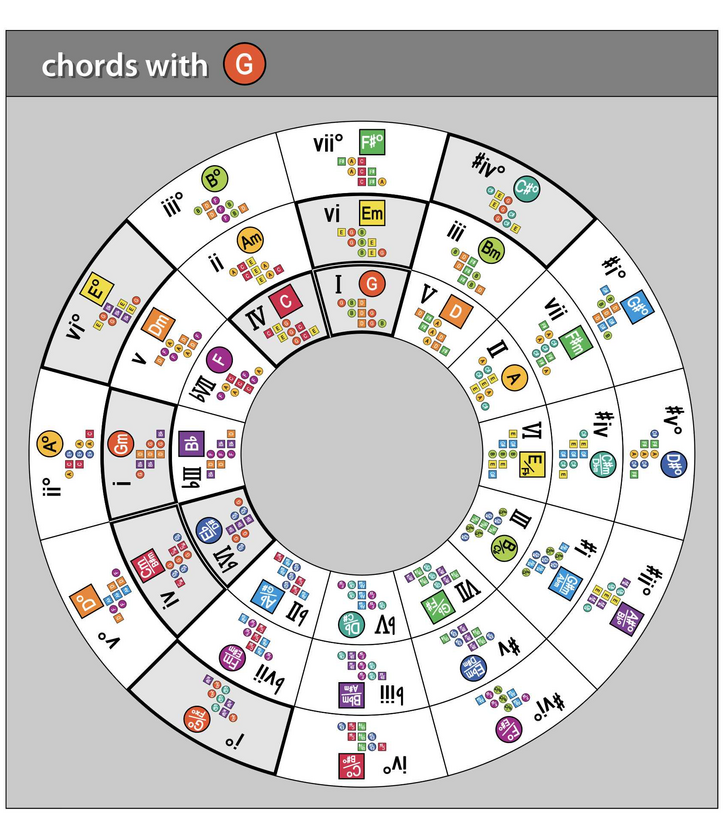
429 | Chords with a G Note

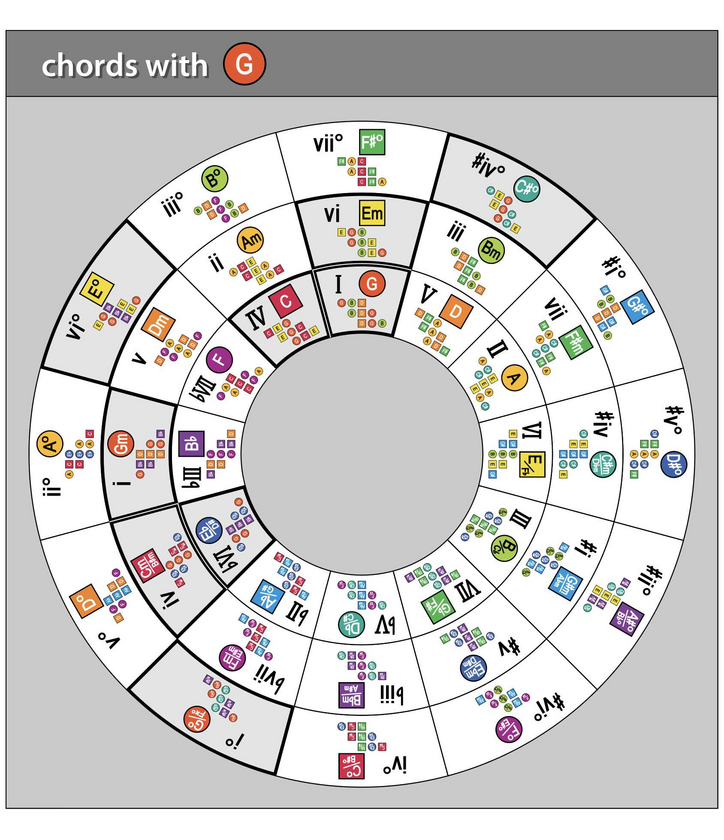
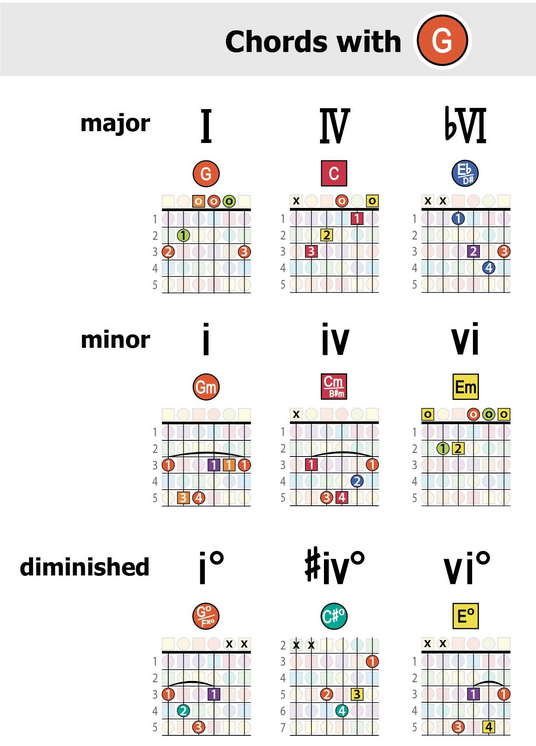
This is a "heatmap" of all chords (triads) with a G note. (The staggered stacks of notes in each cell simply illustrate the various inversions of each triad.)

Chord progressions built from these chords tend to sound good -- due to their shared link with the G note.

You can see (and hear) what I mean as you play around with these chords.

For a map of chords that include the C note, see Post #425. Notice that the harmonic positions of each chord are the same -- that is, the same numerals appear (I, IV, bVI, etc.) since the ChordMap is symmetrical across all keys.

Read full Article
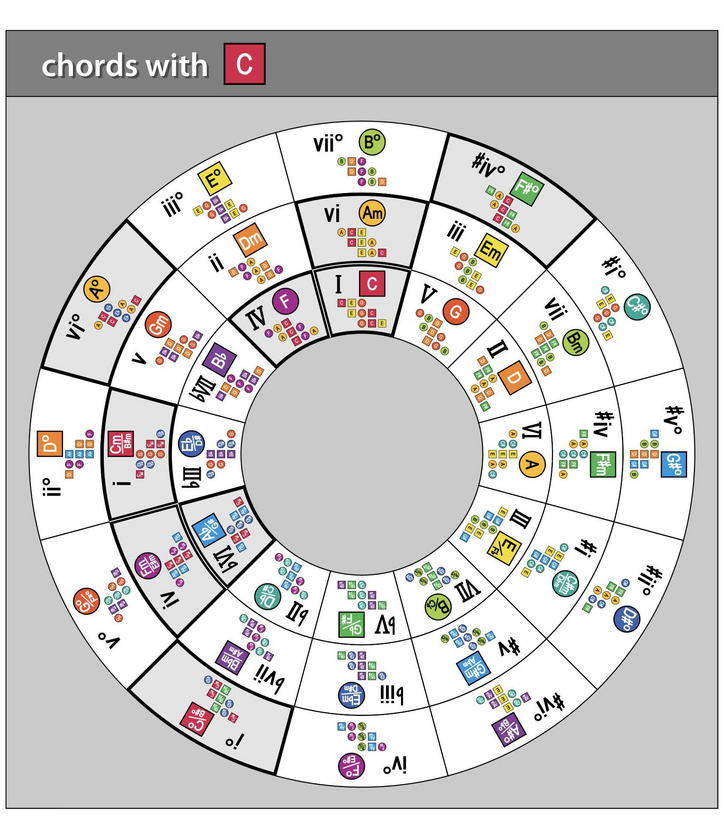
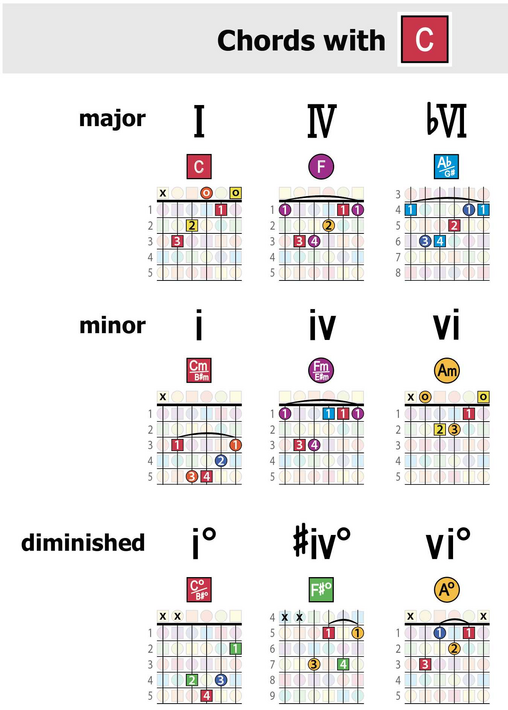
425 | Chords with a C Note

This image helps to get the ideas flowing for songwriting. It shows the various chords (triads) with a C note. Like a heat map, it highlights all the locations across harmonic space that include this pitch.

And what's cool is that, as you play different progressions built from these chords, they tend to sound good. This is due to their shared link with the C note.

You'll see (and hear) what I mean as you play around with these chords.

A song might not be built entirely from these chords alone -- they might simply serve as a springboard for more ideas. Or maybe you can come up with a full tune from these harmonies....

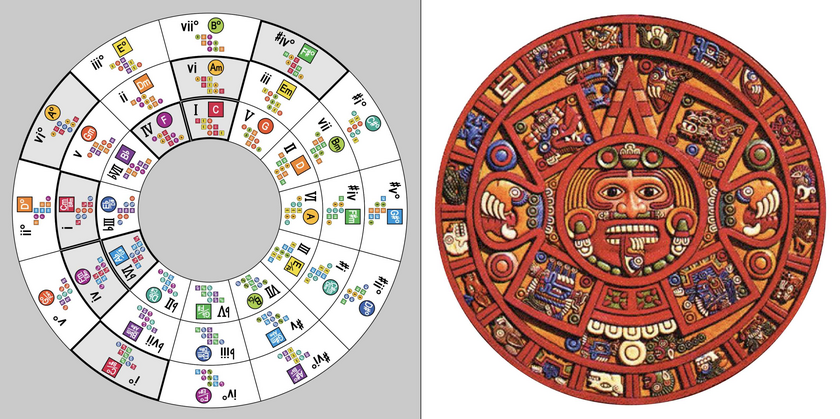
And on a more esoteric note ... it's interesting how this version of the ChordMap resembles the Mayan calendar, yeah? With its colorful symbols and concentric rings, it's structure is strangely similar.

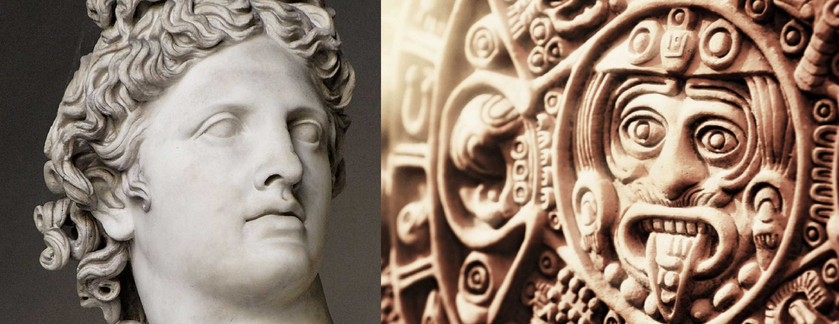
The Aztec sun god, Tonatiuh, sits at the center of the Mayan calendar. Like Apollo, the Greek god of the sun (and music), he plays a central role in the progression of time. Music is the audible convergence of time and space (pitch and rhythm). And it all flows in a cycle.

As they say, everything is connected. :)

Read full Article
post photo preview
376 | The Rosetta Stone of Music

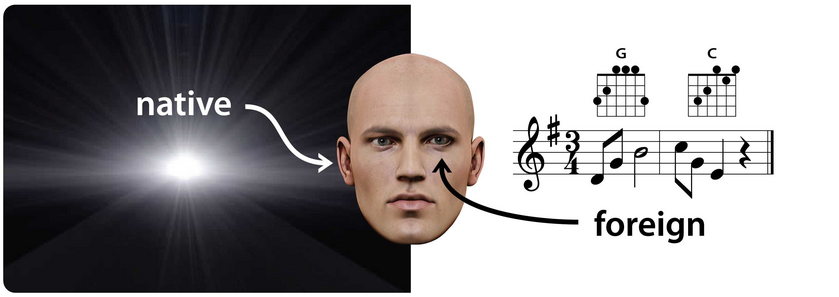
Music is a language. A language that your ears naturally understand, but that’s also utterly foreign to your eyes … as a mess of confusing dots and lines and squiggles.

It’s frustrating, to say the least. Because it means that you’re already fluent in this language (or at least you can easily hear it), but at the same time you’re not able to speak it (by easily playing and creating it yourself).

And as long as you’re confused by the visual language of music, you’ll struggle with the syntax of song, unable to fully articulate the music that you can hear inside.

So what’s needed is a way to align your hearing with your sight. That is, you need a method to illustrate the patterns of music in such a way that they LOOK as natural and simple as they SOUND.

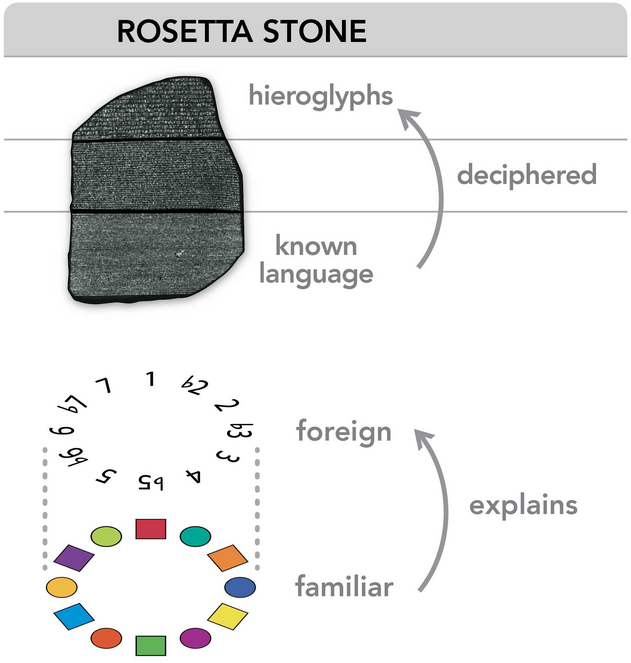
In other words, you need a “Rosetta Stone” to help bridge the gap between the musical language of your ears and that of your eyes.

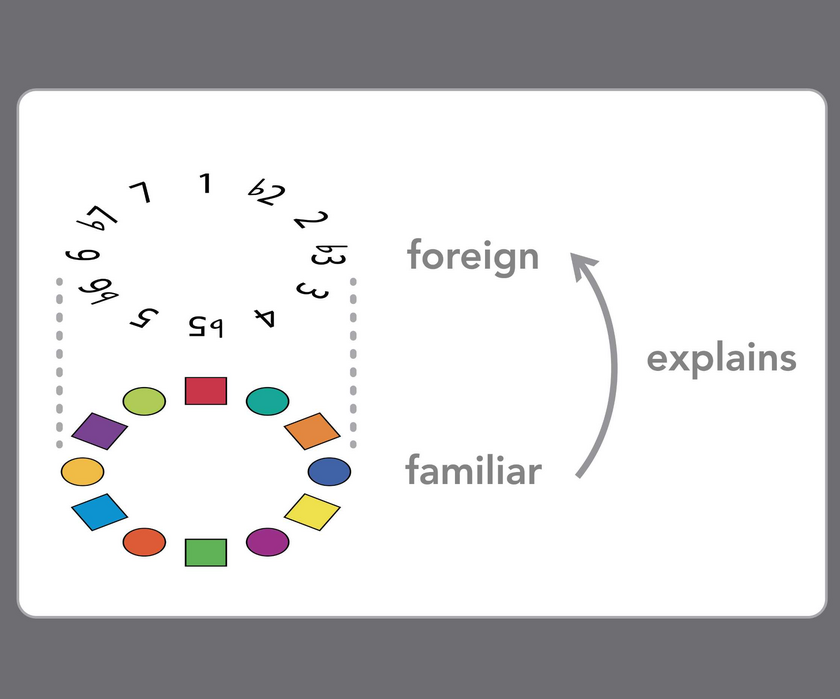
And with color, you have the answer — using the special connection between the circle of fifths and the color wheel, along with the natural link between the circle of fifths and the chromatic scale.

By leveraging your familiarity with color to decipher the otherwise cryptic sequence notes, you can finally crack the code of music. This is our musical Rosetta Stone.


Read full Article
See More
Available on mobile and TV devices
google store google store app store app store
google store google store app tv store app tv store amazon store amazon store roku store roku store
Powered by Locals